
Safety Guidelines for Brisbane Asbestos Handling
If you own a home in Brisbane, especially one built before the late 1980s, there’s a fair chance you’ve heard the warnings about asbestos. Maybe you’ve been planning a renovation and someone casually mentioned, “Careful, that wall might have asbestos.” Or perhaps you’ve spotted some suspicious older sheeting in the shed and wondered what to do next.
Asbestos is one of those things everyone knows is dangerous, but not everyone knows how to handle it safely. And that’s exactly why having the right guidelines is so important especially in a city like Brisbane, where a large portion of homes still contain asbestos materials.
Let’s walk through the key safety guidelines in a simple, conversational, and easy-to-follow way.
Why Asbestos is Still a Big Deal in Brisbane
Brisbane boomed in the post-war decades, and during that time asbestos cement products were used everywhere. Walls, ceilings, eaves, fencing, roofing, you name it.
The issue today isn’t that these materials exist, but that they become dangerous when they’re disturbed, allowing fibres to become airborne. That’s why any drilling, sanding, demolishing, or renovating requires extra caution.
First Step: Always Assume Asbestos Is Present
If your home was built before 1990, it’s safest to assume asbestos may be lurking somewhere. This doesn’t mean you should panic, it just means you should take precautions before doing projects.
Typical locations include:
- Vinyl floor tiles and old adhesives
- Insulation around hot water pipes
- Backing boards behind electrical panels
- Corrugated roofing
- Wall sheeting (like the old “fibro” look)
When in doubt, treat it as asbestos until confirmed otherwise.
Get a Professional Inspection
Okay, here’s the truth: Identifying asbestos by eye is nearly impossible.
Professional asbestos inspector use lab testing to confirm what’s actually dangerous and what’s not. In Brisbane, only licensed asbestos assessors and removalists can legally handle certain types of asbestos, particularly friable asbestos (the crumbly, powdery kind).
A professional inspection will:
- Identify the type of asbestos
- Determine its condition
- Recommend safe handling or removal
- Provide an asbestos register (great for future reference!)
Trust me, this step is worth every cent.
DIY or Professional Removal?
Here’s where many homeowners get confused.
In Queensland:
- You can legally remove up to 10m² of non-friable (bonded) asbestos yourself.
- Friable asbestos must only be handled by licensed professionals.
But even if DIY is allowed, ask yourself: Do you really want to risk exposure to microscopic fibres for a few hundred dollars of savings?
For most people, the answer is no.
If You Proceed With DIY Removal (Under 10m²), Follow These Safety Must-Dos
If you do decide to tackle a small amount of bonded asbestos yourself, stick to these guidelines like glue:
1. Wear the Right PPE
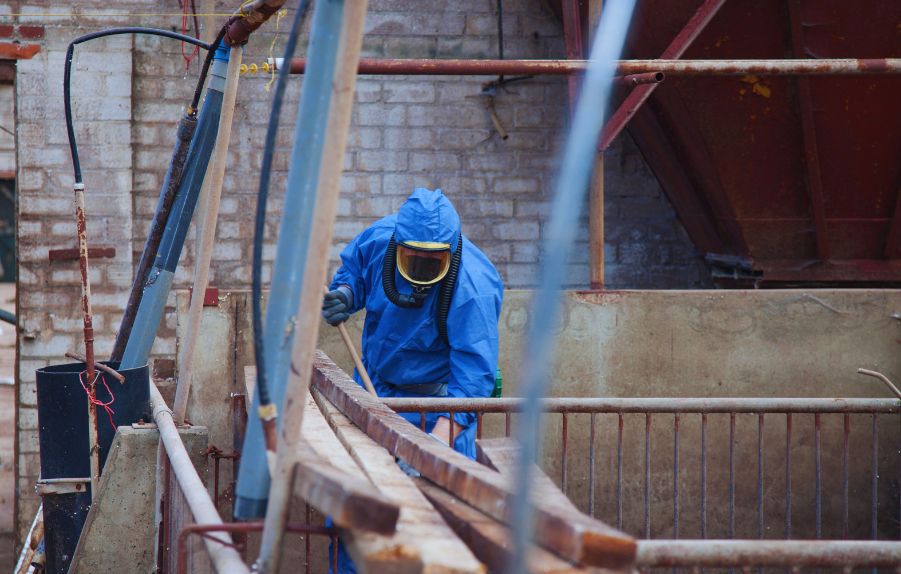
When handling even small amounts of bonded asbestos, proper protective gear isn’t just helpful, it’s absolutely essential. Make sure you’re wearing a correctly fitted P2 respirator, disposable coveralls with a hood, safety goggles, disposable gloves, and boots you can easily wash down afterward. These items help prevent microscopic fibres from reaching your lungs, skin, or clothing. And whatever you do, leave your favourite sneakers in the cupboard, you will definitely not want to wear them again after asbestos work.
2. Keep the Area Damp
Keeping the asbestos material slightly damp is one of the simplest and most effective ways to stop fibres from becoming airborne. A gentle mist of water helps bind the dust, making the work area safer as you remove or handle the material. Just be sure to avoid using high-pressure water, as it can actually break the material apart and release more fibres, defeating the purpose entirely.
3. No Power Tools. Ever.
Power tools like drills, sanders, and angle grinders should never be used when dealing with asbestos, because they generate dust at a level that’s extremely dangerous. These tools can turn solid, bonded asbestos into fine, airborne particles within seconds. Instead, stick to slow, steady work using hand tools only, this keeps the material as intact as possible and greatly reduces the risk of fibre release.
4. Avoid Breaking the Sheets
Your goal during removal is to keep asbestos materials whole, because breaking, cutting, or smashing them releases significantly more fibres into the air. Take your time, work gently, and use the right technique so each sheet or piece comes off cleanly. The less damage you cause, the safer the job becomes for you and anyone else nearby.
5. Properly Seal and Label Waste
Once you’ve removed the asbestos, it must be disposed of safely and legally. All waste needs to be double-bagged using heavy-duty (200-micron) plastic, securely taped shut, and clearly labelled with “ASBESTOS – DO NOT INHALE DUST” so there’s no confusion about what’s inside. After that, the bags must be taken to a Brisbane facility licensed to accept asbestos waste, because no matter how small the amount, it absolutely cannot go in your household wheelie bin.
Clean-Up: Slow and Steady Wins the Race
This is where many people make mistakes.
Do NOT:
- Sweep
- Dry vacuum
- Blow or brush dust into the air
Do THIS instead:
- Use wet rags or mopping
- Dispose of all cleaning materials as asbestos waste
- Shower and change immediately after
Yes, it’s a process. But it’s a necessary one.
When in Doubt, Call the Pros
Honestly? The simplest guideline is this:
If you’re unsure, even a little, get a Brisbane licensed asbestos removalist. They know the regulations, they have the equipment, and more importantly, they remove the risk from your home and your health.
Final Thoughts
Asbestos in Brisbane homes is common, but it doesn’t have to be scary. With the right approach and a solid understanding of the safety guidelines, you can protect yourself, your family, and your home during renovations or repairs.
Whether you choose professional help or handle small tasks yourself, the most important thing is simple: Respect the material and take every precaution seriously.