
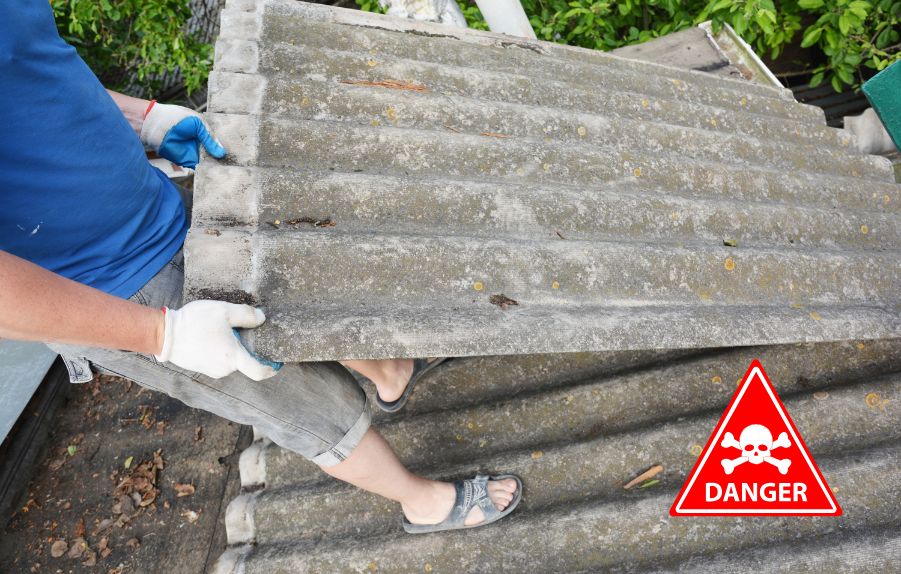
Why You Should Never Remove Asbestos Yourself
If you live in Australia, especially in an older home, there’s a pretty good chance you’ve heard warnings about asbestos. Maybe you’ve found old fibro sheeting in the garage. Maybe you’re pulling up vinyl flooring and notice a black, tar-like adhesive beneath it. Or perhaps a ceiling panel in your home has cracked, and suddenly someone tells you, “That might contain asbestos.”
Your first thought might be: “Well… how hard can it be to remove? I’ll just put on a mask and throw it out.”
But here’s the truth: asbestos is not just another home DIY project. It’s not like replacing tiles or fixing drywall. It’s a highly regulated hazardous material, and removing it incorrectly can have serious, lifelong consequences.
This guide explains why asbestos removal should never be a DIY job, what can go wrong when you try, and why calling a licensed professional is the only responsible choice, for your health, your family, your neighbours, and your home.
What Makes Asbestos So Dangerous?
Asbestos has one major problem: its fibres are microscopic. You can’t see them, smell them, or taste them. But once disturbed, they can linger in the air for hours or days and get into your lungs without you even noticing.
And once they’re in your body, they don’t break down or dissolve. They can remain lodged in your lung tissue for decades.
Exposure to asbestos fibres is linked to life-threatening diseases such as:
- Mesothelioma (an aggressive cancer with no cure)
- Asbestosis (scarring of the lungs)
- Lung cancer
- Pleural thickening and respiratory issues
These diseases usually occur years or even decades after exposure, which is why many people underestimate the danger.
It’s not about a little dust in your home, it’s about fibres that stay with you for life.
DIY Removal = Massive Fibre Release You Can’t Control
When professionals remove asbestos, they use extremely strict controls to stop fibres from escaping into the air. They build sealed containment zones, use HEPA-filtered equipment, and soak materials to prevent dust.
A homeowner, on the other hand, might do something like:
- Snap or break the material into smaller pieces
- Sand, drill, scrape, or saw it
- Sweep or vacuum the debris with a regular vacuum
- Remove it dry
- Dump it in the bin
These actions can send millions of fibres into the air instantly.
Even if you can’t see anything, fibres can settle deep into carpets, air vents, furniture, and clothing and stay there for years.
Unless you have:
- Negative-pressure enclosures
- Correct PPE
- HEPA systems
- Professional containment
- Decontamination zones
- Specialised training
…you simply cannot remove asbestos safely.
It’s Not Just a Health Risk – It’s Often Illegal to Do It Yourself
In Australia, asbestos removal is heavily regulated. While laws vary by state or territory, the general rules are:
You must have a licensed asbestos removalist if:
- The asbestos is friable (easily crumbled or damaged)
- The area is more than 10 square metres of non-friable asbestos
- It’s inside commercial or public buildings
- It involves specific high-risk tasks
Friable asbestos like insulation, crumbling sheeting, or deteriorating ceiling material, can only be removed by a Class A licensed removalist.
Even non-friable asbestos (like bonded cement sheets) often requires a Class B removalist.
Removing asbestos without the proper licence can lead to:
- Heavy fines
- Stop-work orders
- Council or WorkSafe penalties
- Liability if others are exposed
- Legal issues when selling your home
So even if you think you’re capable, the law may say otherwise.
You Don’t Have the Protective Equipment Needed
A dust mask from Bunnings will NOT protect you.
Professionals use:
- Full-face, P2 or P3 respirators
- Disposable coveralls
- Rubber-sealed gloves
- Boot covers
- HEPA-filtered vacuums
- Air-scrubbing equipment
- Industrial-grade decontamination systems
They also follow strict procedures for:
- Wetting materials
- Double-bagging waste
- Sealing the work zone
- Testing the air afterwards
- Disposing of contaminated clothing and PPE
Trying to mimic this at home is nearly impossible and extremely expensive and DIY attempts almost always fall short.
Incorrect Disposal Creates a Huge Public Hazard
Asbestos waste cannot be thrown into your wheelie bin or left on the curb.
In Australia, asbestos must be:
- Double-wrapped in 200-micron plastic
- Labelled clearly
- Taken to a licensed asbestos disposal facility
- Transported safely (often with a waste tracking certificate)
Illegal dumping is a massive problem in Australia and leads to:
- Heavy fines
- Public health dangers
- Contaminated soil
- Community exposure
And if you dump asbestos illegally, accidentally or not, you could be held responsible for cleanup costs and penalties.
You Might Spread Fibres Throughout Your Home Without Knowing It
Here’s a scenario that happens more often than you’d think:
A homeowner cuts out a section of asbestos cement sheeting in a bathroom to “quickly get rid of the problem.” They wear gloves, maybe even a cheap mask, take the debris outside, and sweep up the rest.
They think the job’s done.
But what they don’t see is:
- Fibres in the air conditioning system
- Fibres lodged in the carpet underlay
- Fibres on clothing they later wash with the family’s laundry
- Fibres spread through the entire house
Even a tiny amount can create persistent contamination.
Professional removalists use air monitoring and post-removal clearance inspections to ensure the area is truly safe, services that homeowners cannot perform themselves.
DIY Removal Can Become More Expensive Than Hiring a Professional
Many people turn to DIY because they want to save money.
But here’s the catch: if asbestos is mishandled, the costs can quickly skyrocket.
You may end up needing:
- Full professional decontamination
- Multiple clearance inspections
- HVAC cleaning
- Replacement of carpets, furniture, or ducts
- Disinfecting and restoration
- Disposal fines
- Legal penalties
A job that could have cost $500–$2,000 with a professional can suddenly become a $10,000–$20,000 nightmare.
Licensed Professionals Have the Training, Equipment, and Experience You Don’t
Asbestos removalists undergo specialised training that covers:
- Identifying asbestos-containing materials
- Safe work methods
- Containment setup
- Emergency procedures
- Air monitoring
- Waste transport laws
- Use of PPE and respiratory gear
- Decontamination procedures
They don’t just remove the asbestos, they protect your home, your health, and your peace of mind throughout the process.
When they leave, you’ll know the job was done to Australian standards, and that the space is safe to use again.
So, Why Should You Never Remove Asbestos Yourself?
Because:
- You can’t see the danger
- You can’t control the fibre release
- You don’t have professional equipment
- You could spread contamination
- It’s illegal in many situations
- You risk heavy fines
- You risk your life and the lives of others
- Professionals ensure the job is safe and compliant
One mistake can cause long-term health damage, not just to you, but to your family, friends, neighbours, and future occupants of the home.
Final Thoughts
Asbestos removal is never a DIY task. It’s hazardous, highly regulated, and requires specialised skills and equipment to handle safely. Licensed professionals know how to contain fibres, protect your home, and follow all legal requirements so you don’t put yourself or others at risk.
If you suspect asbestos in your home, the smartest thing you can do is stop, avoid disturbing it, and call a qualified expert.
And if you are looking for a trusted, professional asbestos removal in Brisbane, contact us today, we’re here to keep your home and family safe.